

Does Virtual Staging Really Help Realtors Sell Homes Faster?
If you are a realtor, you already know the challenge: you can have a beautiful property, a motivated seller, and a great listing price—but if the listing photos fail to capture attention, buyers may never make it to the showing.
That is where virtual staging enters the picture.
Instead of leaving an empty room looking cold or difficult to understand, you can digitally add furniture, rugs, lighting, artwork, and décor to show buyers what the space could look like.
But does it actually help you sell more homes faster?
The honest answer is: virtual staging can strengthen your listing marketing and may contribute to faster sales, but it is not a magic button for selling a property. The difference matters.
Let’s look at what the evidence tells us, where virtual staging works best, and how you can use it intelligently. The strongest answer comes from looking at the bigger picture.
The National Association of REALTORS® (NAR) reported in its 2025 Profile of Home Staging that 49% of sellers’ agents observed a reduction in the time homes spent on the market when homes were staged. Thirty percent reported a slight reduction, while 19% reported a significant reduction.
That is useful evidence for staging in general.
However, there is an important distinction: the NAR findings concern home staging overall, not virtual staging alone.
So you shouldn’t tell a seller, “Virtually staging this house will make it sell 30% faster.” The data doesn’t support that claim.
What you can say is that staging can improve how buyers visualize a property and how the property is presented to the market. Virtual staging gives you a fast, flexible way to achieve some of those presentation benefits digitally.
The Short Answer
Think of virtual staging as the storefront window of your listing.
It doesn’t sell the entire store by itself. But if the window looks empty, confusing, or uninviting, people may walk right past.
A well-staged image can help buyers:
- Understand how a room could be used
- Judge furniture scale and room proportions
- Imagine themselves living in the property
- Notice attractive architectural features
- Become more interested in scheduling a showing
NAR found that 83% of buyers’ agents said staging made it easier for buyers to visualize a property as their future home.
That’s a meaningful benefit.
What Virtual Staging Can—and Cannot—Do
Virtual staging can improve your presentation.
It cannot fix an unrealistic asking price, a poor location, major structural problems, or a weak overall marketing strategy.
Think of it as putting the right frame around a painting. A better frame can make the artwork more appealing, but it doesn’t change the painting itself.
What Is Virtual Staging?
Virtual staging is the process of digitally adding furniture and décor to a photograph of a property.
You might start with an empty living room. A virtual staging professional or AI-powered tool can add a sofa, coffee table, rug, artwork, plants, lighting, and other appropriate furnishings.
The goal isn’t to create a fantasy house.
The goal is to help buyers understand the real property.
NAR describes virtual staging as digitally enhancing property photos by adding elements such as furniture and décor.
How Virtual Staging Works
A typical workflow looks like this:
- Photograph the room professionally.
- Select an appropriate design style.
- Digitally add furniture and décor.
- Preserve the property’s actual architecture.
- Review the image for realistic scale, lighting, and shadows.
- Clearly identify digitally staged images where required.
- Use the finished images in your marketing.
The quality of the original photograph still matters. Virtual furniture can’t rescue a blurry, poorly composed image.
Virtual Staging vs. Traditional Home Staging
Traditional staging brings actual furniture into the property.
Virtual staging brings the furniture into the photograph.
Physical staging can create an experience buyers can touch and walk through. Virtual staging is particularly useful when you need speed, flexibility, or a furnished visual for an empty property without physically transporting furniture.
Neither method is automatically right for every listing.
The smart question is: What does this particular property need to be marketed effectively?
Why Listing Photos Matter So Much to Realtors
Imagine two nearly identical homes appear in a buyer’s search results.
One shows an empty room with bare walls and a few awkward angles.
The other shows the same room with appropriately scaled furniture, attractive styling, and a clear sense of purpose.
Which one makes you want to click?
That first visual impression matters.
NAR’s 2025 staging report found that 73% of buyers’ agents considered having photos in listings important to their clients. Videos were also important to 48%, while virtual tours were important to 43%.
Most Buyers See the Listing Before the House
Your listing photograph often gets the first opportunity to sell the idea of the property.
Before a buyer opens the front door, they may already have formed an opinion from your photos.
That’s why a good listing isn’t simply a collection of room snapshots.
It’s a visual story.
Empty Rooms Can Be Difficult to Visualize
Have you ever walked into an empty room and immediately understood exactly what furniture belongs there?
Most people don’t.
Furniture provides visual clues.
A dining table tells you where dining could happen. A sofa shows the scale of a living room. A desk can demonstrate that an unused corner could become a home office.
That’s one reason staging can be valuable.
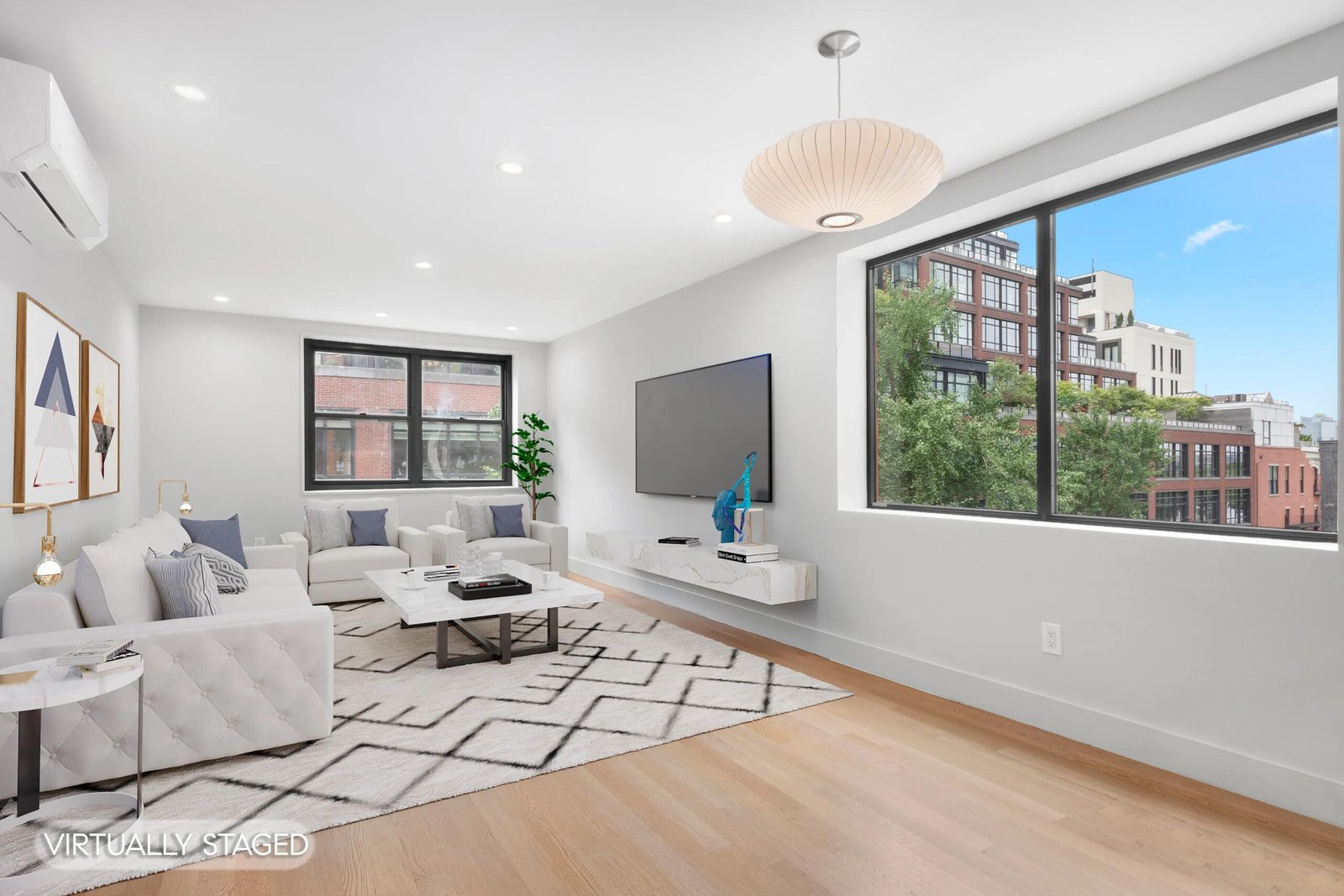
How Virtual Staging May Help Realtors Attract More Buyer Attention
The biggest opportunity isn’t necessarily getting someone to buy immediately.
It’s getting them to stop scrolling.
Create a Stronger First Impression
Good virtual staging can make an empty room feel purposeful.
You might use:
- A modern sectional in a large living room
- A round dining table in an open dining area
- A desk in an unused office
- Beds and nightstands in an empty bedroom
- Comfortable seating in a basement family room
The furniture should support the room—not overwhelm it.
Help Buyers Understand the Purpose of a Room
Some rooms sell themselves.
Others don’t.
A large open basement might look like a giant unfinished rectangle in an empty photograph. Add appropriately scaled furniture, and suddenly buyers can visualize a family room, entertainment area, or home office.
You’re not changing the room.
You’re explaining it visually.
Make Vacant Properties Feel More Complete
Vacant properties are particularly suitable for virtual staging.
Without furniture, buyers may struggle to judge scale. Is that room large enough for a sectional? Can a king-size bed fit? Is there space for a dining table?
A carefully staged photograph can provide useful visual context.
Can Virtual Staging Actually Reduce Days on Market?
This is where you need to be careful.
Yes, staging may be associated with faster sales. But you cannot isolate staging from everything else that happens during a property sale.
Price matters.
Location matters.
Condition matters.
Mortgage rates, inventory, competition, seasonality, buyer demand, photography, marketing, and negotiation all matter.
What Research Tells Us
NAR’s 2025 survey found that 49% of sellers’ agents observed reduced time on market when homes were staged. Meanwhile, only 4% reported that staging increased time on market.
NAR also found that 29% of real estate agents reported staging resulted in a 1% to 10% increase in the dollar value offered.
Those numbers are worth paying attention to—but they’re survey findings about agents’ observations, not proof that staging alone caused those outcomes.
That’s an important distinction.
Correlation Does Not Always Mean Causation
Suppose a beautifully photographed, professionally staged home sells in 10 days.
Did staging cause the sale?
Maybe it helped.
But perhaps the home was also priced correctly, located in a desirable neighborhood, recently renovated, and launched during a period of strong demand.
Good marketing works as part of a system.
Can Virtual Staging Help Realtors Generate More Buyer Leads?
This is where virtual staging can become particularly useful.
You don’t necessarily need the image to produce an immediate offer.
You first want it to generate attention and interest.
Make the Listing More Compelling
A buyer scrolling through dozens of listings has limited attention.
Strong imagery gives you another opportunity to communicate value.
Instead of showing an empty room, show what the room could realistically become.
Give Buyers a Reason to Explore Further
A staged image can answer a silent question:
“What could I do with this space?”
That’s powerful.
The buyer may not be ready to make an offer, but they may click the listing, save it, share it with a partner, or schedule a showing.
Turn Online Interest Into Showings
NAR reported that 31% of buyers’ agents said buyers were more willing to walk through a home they saw online when it was staged.
Again, that’s about staging overall rather than virtual staging specifically.
But it demonstrates why the online presentation of a property deserves serious attention.


Which Homes Benefit Most From Virtual Staging?
Virtual staging isn’t equally useful for every property.
Vacant Homes
This is probably the easiest application to understand.
If the house is empty, virtual furniture can provide context without moving physical furniture into every room.
New Construction Homes
Builders can use virtual staging to show buyers what an unfinished or newly completed property could look like after furnishing.
This can be particularly useful when you’re marketing several floor plans or communities.
Homes With Awkward Rooms
Have a room that looks like it doesn’t have a purpose?
Show one.
An awkward corner can become a home office. A large basement can become a family room. A spare room can become a guest bedroom.
Investment Properties
Virtual staging can also help investors communicate potential uses without physically furnishing the property.
Which Rooms Should Realtors Virtually Stage?
If your budget only allows you to stage a few images, prioritize strategically.
NAR’s 2025 research found that buyers’ agents considered the living room most important to stage at 37%, followed by the primary bedroom at 34% and the kitchen at 23%.
Living Room
Start here when the room is empty.
Show buyers how the space can function for everyday living and entertaining.
Primary Bedroom
A properly scaled bed, nightstands, rug, and restrained décor can immediately communicate the room’s proportions.
Dining Room
An empty dining area can be difficult to interpret, especially in an open floor plan.
A dining table can show buyers exactly how the space might work.
Basement and Bonus Rooms
These are excellent candidates because their purpose isn’t always obvious.
Virtual Staging vs. Physical Staging: What Should Realtors Choose?
There isn’t one answer for every property.
Consider Cost and Logistics
Physical staging may involve furniture rental, delivery, setup, removal, storage, and scheduling.
Virtual staging eliminates much of that physical logistics.
NAR reported a median cost of $1,500 for a staging service in its 2025 survey, although actual costs vary significantly by property and market.
Virtual staging pricing varies by provider and image complexity, so compare the actual quote rather than assuming one fixed price.
Consider Speed
Need marketing images quickly?
Virtual staging can be useful when you don’t have time to coordinate furniture delivery and installation.
Consider a Hybrid Strategy
Why choose only one?
You might physically stage the main living areas while virtually staging an empty basement, bedroom, or secondary room.
That can give you a balance between physical buyer experience and online visual presentation.
Common Virtual Staging Mistakes Realtors Should Avoid
Bad virtual staging can do more harm than good.
Using Furniture That Is the Wrong Size
A tiny sofa in a huge room makes the room look strange.
An enormous sectional can make a normal-sized room appear cramped.
Scale matters.
Changing the Property’s Architecture
This is one of the biggest red flags.
Don’t digitally move windows, doors, walls, stairs, kitchens, or room boundaries simply to create a prettier photograph.
The staged image should represent the actual property.
Making Images Look Unrealistic
Avoid excessive décor, strange shadows, floating furniture, distorted perspectives, or lighting that doesn’t match the original room.
If buyers immediately think, “That’s obviously fake,” you’ve lost the benefit.
Failing to Disclose Virtual Staging
Transparency matters.
NAR’s guidance emphasizes truthful real-estate advertising, and its consumer guidance notes that professionals must market properties consistently with applicable MLS rules.
Always check the requirements that apply to your market and listing platform.
How Realtors Can Use Virtual Staging as Part of a Complete Marketing Strategy
Don’t treat virtual staging as the entire marketing plan.
Use it as one tool in your toolbox.
Combine It With Professional Photography
Start with strong photography.
Virtual staging should enhance the photograph, not compensate for poor lighting, bad composition, or low image quality.
Use Staged Images Across Your Marketing Channels
Depending on platform requirements, your staged images can support:
- MLS listings
- Your website
- Social media
- Email campaigns
- Property brochures
- Listing presentations
- Video marketing
Match the Style to the Property
Don’t put ultra-luxury furniture into a modest suburban starter home simply because it looks impressive.
Your staging should fit the property.
Modern. Transitional. Scandinavian. Traditional. Coastal.
Choose a style that helps the buyer see the home’s potential without creating an unrealistic expectation.
How to Measure Whether Virtual Staging Is Working
Here’s where you can become much more strategic.
Don’t simply ask, “Does this picture look better?”
Ask, “Did the listing perform better?”
Track Listing Engagement
Compare views, saves, clicks, and other available listing metrics before and after improving your visual presentation.
Track Inquiries and Showings
Monitor whether better imagery is associated with more buyer questions and showing requests.
Track Days on Market
Compare your results over multiple listings.
One property isn’t enough to establish a pattern.
Compare Similar Listings
If possible, compare similar homes by:
- Price range
- Property type
- Neighborhood
- Condition
- Number of bedrooms
- Marketing period
That gives you a more useful picture of whether your marketing strategy is working.
What About Home Sellers and Home Builders?
Virtual staging isn’t just a realtor’s tool.
For Home Sellers
If your house is vacant or sparsely furnished, virtual staging can help buyers visualize the potential of each room.
It can also help your realtor create stronger marketing images without bringing furniture into every room.
For Home Builders
Builders can use virtual staging to market new construction before every property is fully furnished.
You can show multiple design possibilities from the same room photograph.
That makes virtual staging particularly interesting for model homes, inventory homes, pre-construction marketing, and floor-plan presentations.
For Realtors
You get another way to differentiate your listing and communicate your marketing value to sellers.
Instead of saying, “I’ll list your home online,” you can demonstrate exactly how you’ll present it.
Conclusion: So, Does Virtual Staging Help Realtors Sell More Homes Faster?
Yes, virtual staging can be a valuable part of a realtor’s marketing strategy, especially for vacant homes, new construction, and rooms that are difficult to visualize.
But the smarter way to think about it isn’t, “Virtual staging guarantees a faster sale.”
It’s this:
Better presentation can create better opportunities.
The 2025 NAR Profile of Home Staging found that 83% of buyers’ agents said staging made it easier for buyers to visualize a property as their future home, while 49% of sellers’ agents observed reduced time on market for staged homes.
Those findings don’t prove that virtual staging alone causes faster sales. They do show why presentation deserves a place in your marketing strategy.
So if you have an empty living room, an awkward basement, an unfinished new-construction property, or a listing that isn’t making a strong visual impression, ask yourself one simple question:
Are you showing buyers what the property is—or helping them see what it could become?
Used honestly, realistically, and strategically, virtual staging can help you bridge that gap.
And sometimes, getting a buyer to stop scrolling, imagine themselves living there, and book a showing is the first step toward getting the home sold.
FAQs About Virtual Staging
1. Does virtual staging really work?
Virtual staging can improve the visual presentation of a property and help buyers understand how rooms could be furnished. However, it does not guarantee more offers or a faster sale. Price, location, condition, market demand, and the overall marketing strategy also matter.
2. Can virtual staging make a home sell faster?
It may contribute to a faster sale by improving listing presentation and helping buyers visualize the property. However, there is no reliable basis for promising that virtual staging alone will reduce a home’s days on market by a specific percentage.
3. Is virtual staging better than traditional home staging?
Neither is universally better. Physical staging lets buyers experience real furniture during an in-person showing, while virtual staging offers speed, flexibility, and digital presentation. The right choice depends on the property, budget, marketing goals, and target buyers.
4. Which rooms should a realtor virtually stage first?
Start with the rooms that have the greatest potential marketing impact. NAR’s 2025 research identified the living room, primary bedroom, and kitchen as the three most important rooms to stage from buyers’ agents’ perspectives.
5. Can home builders use virtual staging to sell new construction homes?
Absolutely. Builders can use virtual staging to demonstrate furniture layouts, design styles, and lifestyle possibilities in new homes. It can be especially useful when a property is vacant or when buyers need help visualizing how an unfinished space could look once furnished.